Seva Sindhu
A large language model built for Karnataka's citizen-service platform, running inside the state data centre.
- Runs on
- Karnataka State Data Centre
We build language models that do one job each. We teach them on your approved examples, run them on your own servers, and measure them like any other system in production.
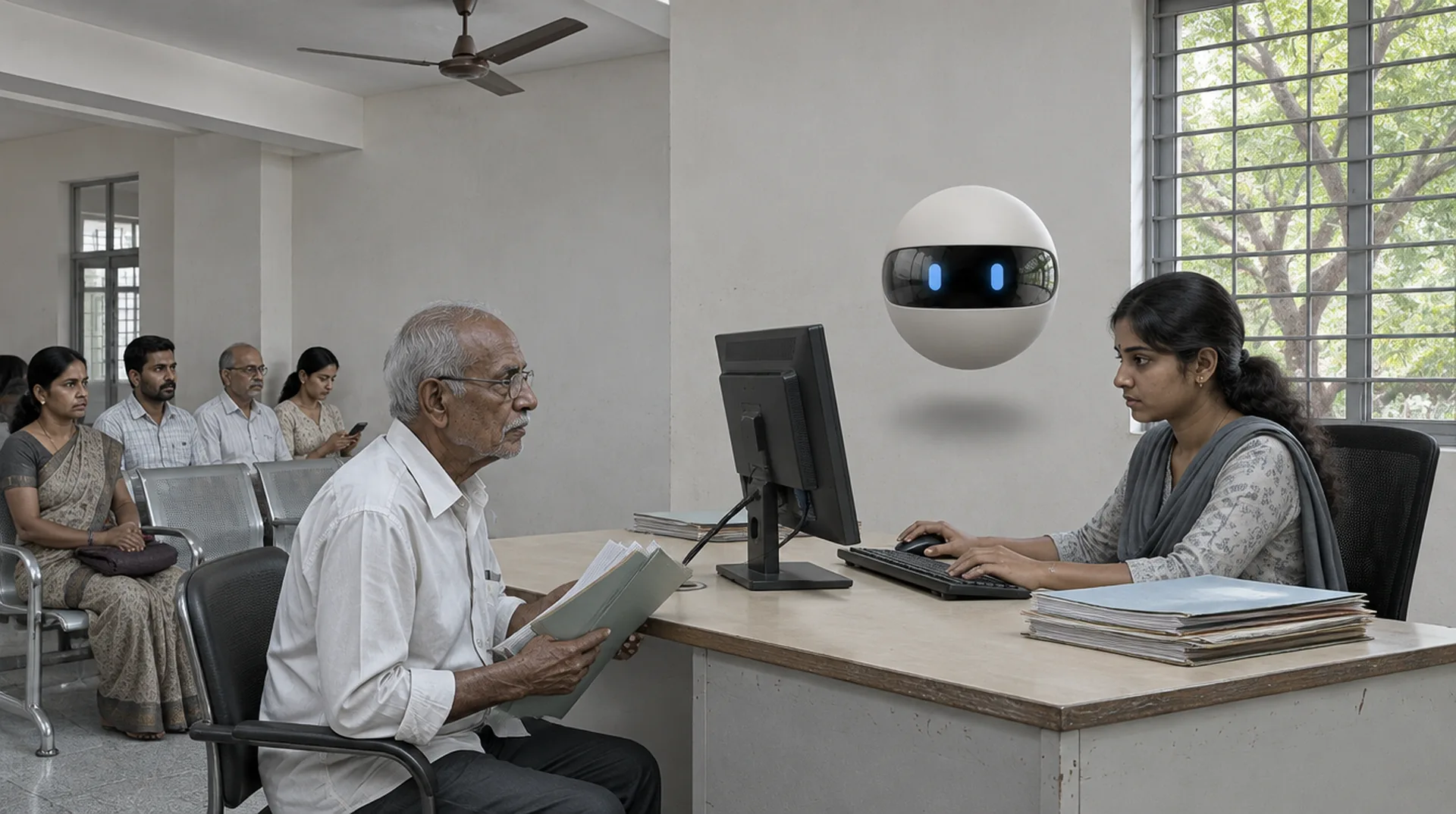
A certificate, a licence, a pension. Karnataka's Seva Sindhu alone offers 850+ services from 80 departments, in Kannada and English, and has handled crores of applications. Behind every request is an officer with a queue.
Seva Sindhu figures: NeGD · Picture: illustration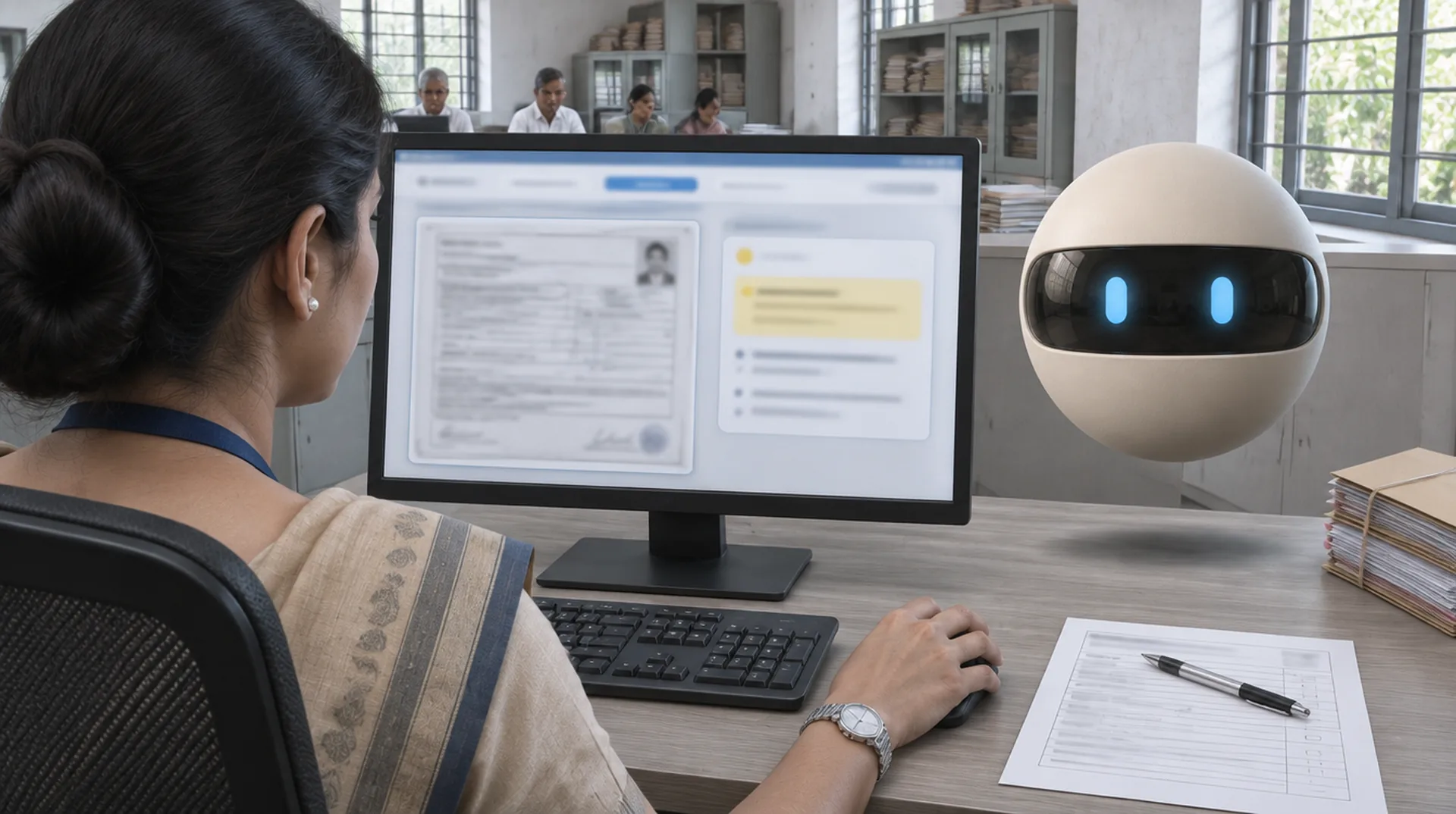
Before the officer opens a file, a model has read it: what's missing, which rule applies, how similar cases went. The officer accepts, edits or rejects. Nothing is approved by a machine.
Illustration of how a local model sits inside a service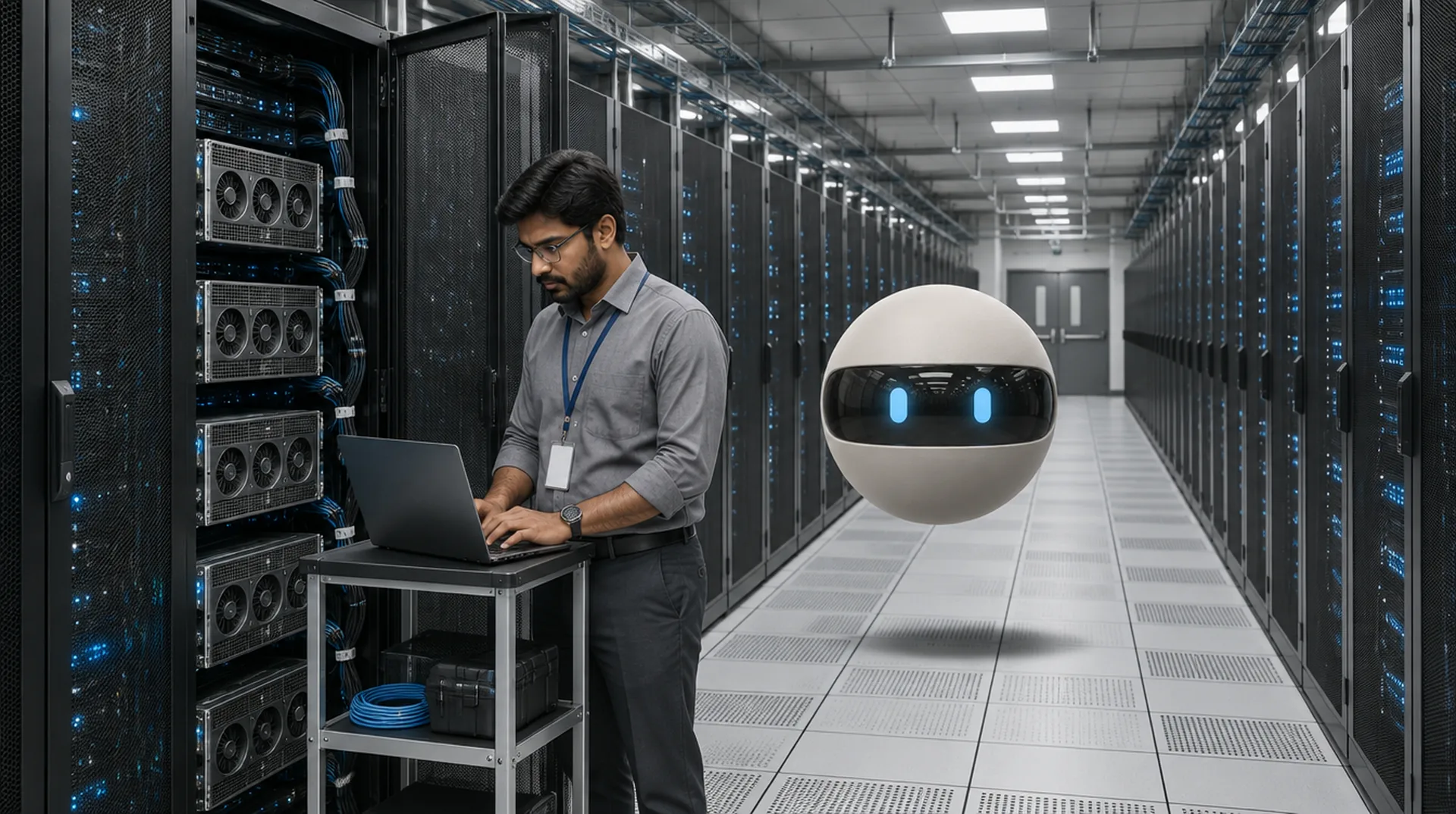
The model lives on servers inside the data centre, next to the data it reads. Applications don't travel to an outside AI service, and the department decides who sees what.
Picture: illustrationWe start from a proven open-weight base model and train small add-ons, called adapters, on approved past decisions. Before it answers, it looks things up in the department's own rules. Guardrails check every output.
Fine-tuning (LoRA) · retrieval (RAG) · guardrailsHow many of its flags were right, how many real cases it caught, how fast, at what cost, and how often people overrule it. Every model is scored on cases it has never seen before anyone relies on it.
Precision · recall · p95 latency · cost · overridesWe built a large language model for Seva Sindhu, Karnataka's single portal for citizen services, and deployed it on the state's own infrastructure. Citizen data stays where the state keeps it.
Platform facts: NeGD state directory · Seva Sindhu
A model earns its place where the same decision is made thousands of times a day. Here are four of the jobs ours do, and the kinds of work we take on next.
A large language model built for Karnataka's citizen-service platform, running inside the state data centre.
Takes the repetitive work out of a finance team's day-to-day accounting.
Drafts and checks a marketing team's content and campaign work.
Reads how data moves between systems and explains it in plain language.
Pulls fields from invoices, certificates and forms into clean, structured data.
Reads each complaint, tags department and urgency, and sends it to the right desk.
Turns every helpdesk call or chat into a summary and a next step.
Tell us which decision your team makes a thousand times a day.
Talk to usThe same method we use to build companies: people lead, agents do the volume, and every step ends in something a person signs. Plain words first, the technical detail underneath.

Sit with the people who do the work. Agree on one decision the model helps with, and the number that proves it works.
Task spec · baseline measured on the manual processLead + LOGICCollect real past cases with the right answer for each, and lock some away for the final test.
Train / validation / held-out test split · de-duplication · Kannada + English normalisationECHO · SCRIBEPersonal details are masked before anything is stored, trained on or logged.
PII detection and masking (names, phone, ID numbers, addresses) · access logsSENTRYStart from a proven open model that is the right size for the job and the hardware.
Open-weight base · licence, language coverage, size vs latencyEngineering lead · FORGETrain small add-ons on approved examples and connect it to your own documents.
LoRA / QLoRA adapters · retrieval over your documents (RAG)FORGEScore it on cases it has never seen, against the manual baseline. Try to break it on purpose.
Held-out set · precision, recall, F1 · groundedness · red-team promptsSENTRY · PULSEDeploy on your servers. Every correction a person makes becomes a new test case.
Quantised INT8 / INT4 · high-throughput serving · monitoring, drift, rollbackHELM · PULSE"95% accurate" can hide a model that misses half the cases that matter. Move the slider and watch the trade-off on 100 made-up applications, 30 of which really need follow-up.
Worked example with made-up data, to show how the numbers move. Not a client result.
Of the cases the model flagged, how many were right. Low precision wastes people's time on false alarms. right flags ÷ all flags
Of the cases that really needed a flag, how many it caught. Low recall lets real problems through. right flags ÷ real cases
One number that is only high when both precision and recall are.
Share of all answers that were right. Easy to inflate: a model that flags nothing here still scores 70%.
For answers written from your documents: how much of what it said the sources actually support.
95 in every 100 requests finish within this time. Averages hide the slow ones.
How often a person changes or rejects the model's output. The most honest number in production.
| Task | Test set | Precision | Recall | p95 latency | Overrides | Live since |
|---|---|---|---|---|---|---|
| The one decision it helps with | Unseen cases, with their size and date | Of its flags, how many were right | Of the real cases, how many it caught | How fast, for 95 in 100 requests | How often a person changed its answer | When people started relying on it |
Every figure states its test-set size, date and the manual baseline it is compared with. Ask us for the scorecard of the model closest to your work.
Data comes in, personal details are masked, the model answers from your documents, guardrails check it, and a person decides. Every decision is logged and becomes a test case for the next version.
Open-weight models such as Llama, Mistral, Qwen or Gemma, and Indian models such as Sarvam or Param, chosen per job for language, licence and size.
LoRA and QLoRA adapters trained on approved examples; retrieval over your documents so answers cite their source.
Quantised models on your GPUs with high-throughput serving such as vLLM, behind your own network and identity controls.
PII masking, schema and policy guardrails, audit logs, human review for low-confidence and high-stakes answers.
If the same decision happens thousands of times a day, a model may be worth building. We'll tell you honestly if it isn't.